

Step-by-Step: How to Transition Your ISO Management System to de.iterate
For organisations already certified to ISO standards like ISO 9001, ISO 14001 and ISO 45001, compliance is an ongoing journey—not a one-time achievement. While certification demonstrates a commitment to best practices, many businesses still rely on outdated manual management systems that create inefficiencies and compliance risks. The next logical step? Digitisation.
A digital management system transforms compliance from an administrative burden into a streamlined, value-adding process. If your business is already certified, here’s why making the shift to a digital platform is essential.
Why ISO Certification Alone Is Not Enough
1. Maintaining Compliance Is Just as Important as Achieving It
Many businesses invest significant effort into obtaining certification but then struggle to maintain compliance effectively. Manual systems make ongoing compliance cumbersome, increasing the risk of non-conformance over time. A digital system helps to automate key compliance tasks, ensuring continuous alignment with ISO standards.
Compliance is not static—it requires continuous monitoring, reporting, and adaptation to regulatory changes. A digital system ensures that all compliance requirements are met in real time, reducing the chances of human error, missed updates, or gaps in documentation.
2. Manual Systems Introduce Unnecessary Risk
Despite being certified, companies relying on spreadsheets, shared drives, or paper-based records face unnecessary risks, including:
- Version Control Issues: Outdated policies may remain in circulation, leading to compliance gaps.
- Limited Visibility: Without a centralised system, tracking compliance across teams and locations is difficult.
- Inefficient Audit Preparation: Retrieving documentation for audits can be time-consuming and stressful.
- Security Vulnerabilities: Paper-based systems or unsecured digital files increase the risk of data breaches.
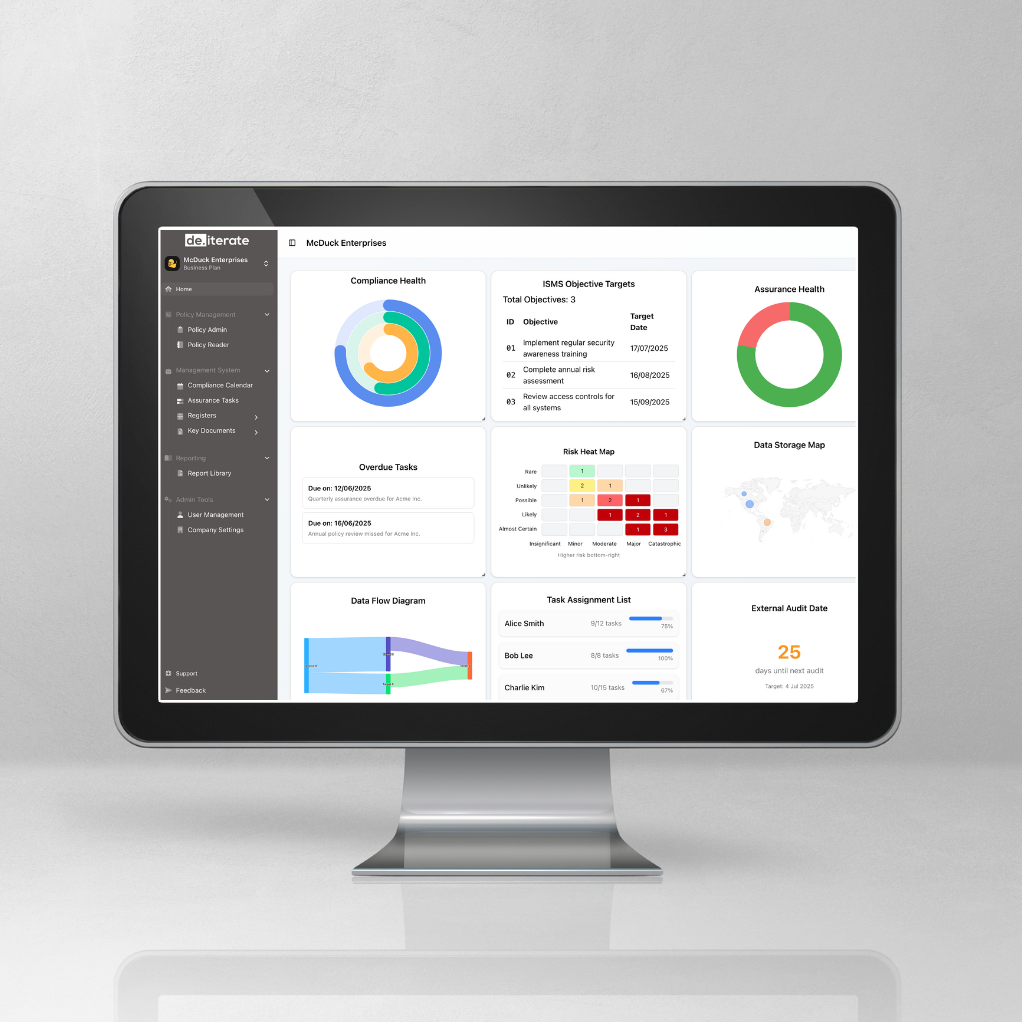
Manual management also results in a lack of real-time reporting. Compliance officers and executives need instant access to the latest compliance status, risk reports, and audit logs. A digital management system consolidates all relevant information in a single dashboard, reducing uncertainty and improving decision-making.
3. Digital Systems Make Audits Easier
ISO-certified organisations must undergo regular audits. A digital management system ensures audit readiness by:
- Providing a structured, centralised repository for all compliance documents.
- Automating version control to ensure auditors always see the latest records.
- Streamlining audit trails with real-time data tracking and reporting tools.
- Reducing time spent locating and verifying documents.
- Enabling instant retrieval of historical records and previous audit results.
With a digital system, businesses can significantly cut down on preparation time, reduce errors, and demonstrate their compliance in a structured, transparent way. Auditors appreciate well-organised systems that provide easy access to evidence, making the entire process smoother and less stressful.
How Digitisation Enhances ISO Compliance
Digitising your management system with de.iterate allows you to:
- Reduce Administrative Burden: Automate document updates, notifications, and approval workflows.
- Improve Compliance Monitoring: Gain real-time visibility into compliance status and risk areas.
- Streamline Employee Training: Ensure policies are read and acknowledged through automated tracking.
- Enhance Risk Management: Identify and address potential non-conformities before they become problems.
- Integrate Compliance Across Multiple ISO Standards: Manage ISO 9001, ISO 14001, and ISO 45001 requirements in a single system.
- Add new standards to your Management System: Switch on additional standards such as Data Security (ISO27001) or Data Privacy (ISO27701) easily and without duplicating efforts.
Another key advantage is centralising compliance efforts. Many organisations hold multiple ISO certifications, requiring them to manage overlapping compliance tasks. A digital system allows businesses to integrate multiple frameworks into one streamlined process, reducing duplication of effort and ensuring a cohesive approach to compliance.
The Transition Is Easier Than You Think
Many ISO-certified companies hesitate to digitise their management system, fearing a complex transition. The reality? If you’re already certified, much of your documentation is already in place—it just needs to be migrated into a structured digital platform. We can even use this opportunity to streamline any outdated documents and customise your assurance program to keep you on track.
de.iterate makes this transition seamless by:
- Importing Your Existing Documentation: No need to start from scratch.
- Providing Customisable Templates: Align digital workflows with your current processes.
- Offering Implementation Support: Ensuring a smooth and efficient rollout.
- Automating Key Compliance Processes: Reducing manual workload and improving consistency.
- Ensuring Scalability: Growing alongside your business as compliance requirements evolve.
- Digitise your Assurance Program: from tasks to checklists, leverage your digital management system to keep you on track.
Final Thoughts
If your organisation is already ISO-certified, digitising your management system is the natural next step. Moving to a digital platform enhances efficiency, reduces compliance risks, and positions your business for long-term success. By leveraging automation, centralised reporting, and streamlined workflows, your organisation can stay ahead of compliance requirements with minimal effort.
Sticking with manual compliance processes limits your ability to adapt to changes in regulations, customer expectations, and industry best practices. Digitisation not only keeps your organisation compliant but also makes compliance a strategic asset rather than a burden.
Ready to take your ISO compliance to the next level? Schedule a demo with de.iterate today and discover how easy it is to digitise your management system.
Tags: