
The Australian Privacy Principles (or APPs) are the bedrock of Australia’s privacy protection framework, and are deeply rooted in the Privacy Act 1988. Any organisation or agency covered by the Privacy Act needs to uphold the APPs when it comes to personal information.
Under the Australian Privacy Principle 1 (APP 1), organisations are required to manage personal information in an open and transparent manner. This basically means being upfront about how you deal with private information – think clear privacy policies and practices.
A well-structured privacy policy is not just a compliance measure; it’s a reflection of your organisation’s integrity. Let’s take a look at the key elements that should be included.
1. Clear Identification of Your Organisation
Start with the basics – clearly identify your organisation and provide contact details for privacy-related inquiries.
2. Types of Personal Information Collected
Detail the kinds of personal information your organisation collects and holds. This includes any indirect collection from third parties or publicly available sources.
3. Purpose of Collection
Clearly state why you are collecting personal information. This should include both primary purposes and any secondary uses that might not be immediately obvious.
4. How Information is Collected and Stored
Explain the methods used for collecting personal information, whether it’s through forms, online interactions, or other channels. Also, describe how this information is securely stored and protected.
5. Disclosure Practices
Outline how and when personal information may be disclosed, especially to third parties. This should cover both routine disclosures and exceptional circumstances.
6. Access and Correction Rights
Inform individuals of their rights to access and correct their personal information. Provide a straightforward process for them to do so.
7. Anonymity and Pseudonymity Options
Where feasible, explain how individuals can engage with your organisation anonymously or under a pseudonym.
8. Cross-border Disclosure of Personal Information
If personal information is shared across borders, clarify the countries where recipients are located and the measures in place to ensure the protection of the data.
9. Complaints and Disputes Resolution Process
Provide a clear mechanism for individuals to lodge privacy complaints and explain how these complaints will be handled.
10. Policy Updates and Availability
Lastly, ensure your Privacy Policy is easily accessible, and inform stakeholders of any updates or changes to the policy.
Creating a Privacy Policy in line with APP 1 is about fostering trust and transparency. It’s not just a legal requirement but a commitment to responsibly managing the personal information entrusted to your organisation.
Need Help?
Questions? Queries? Keen for further information about privacy and data? Contact de.iterate today.
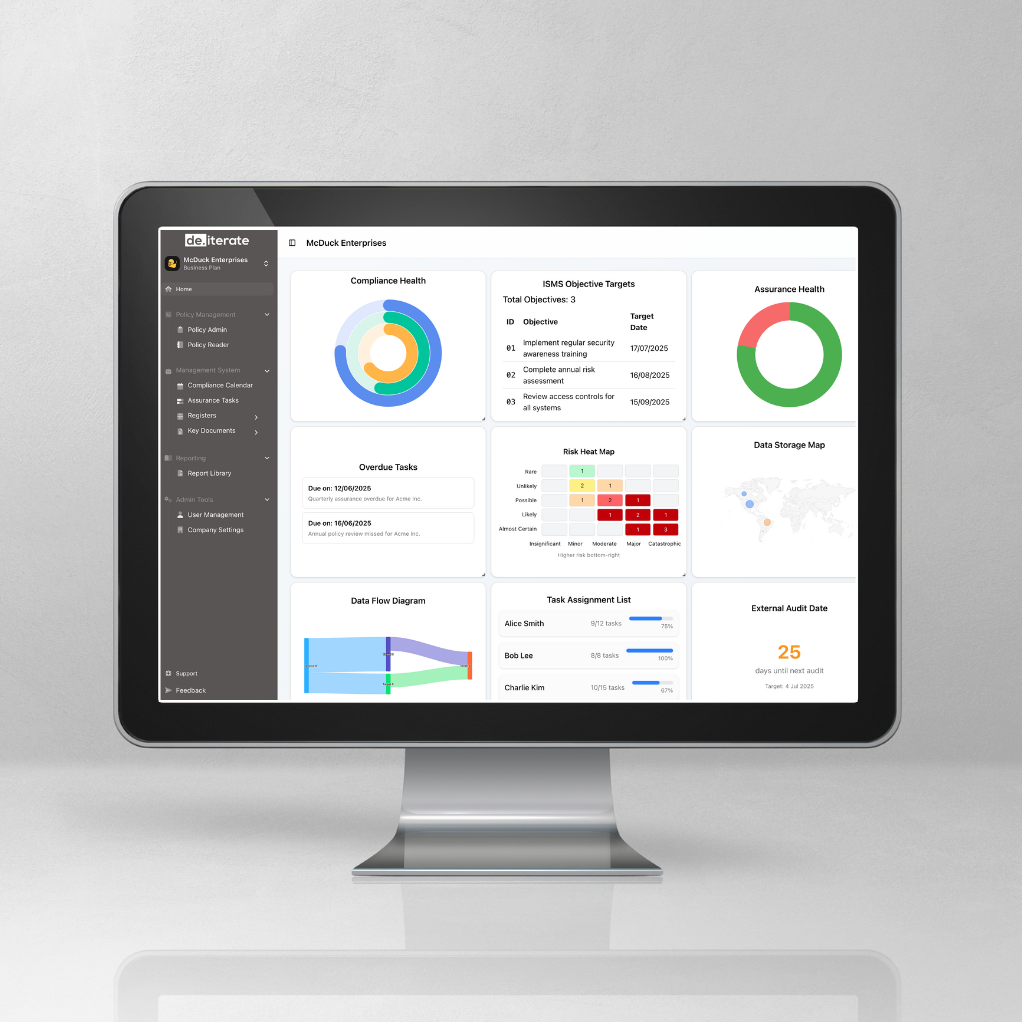
Did you know? All this can be managed by the de.iterate platform—from just $99 per month. Buy now.
Disclaimer: The articles on our website are intended to stimulate interest in the subject matters. All comments and articles are for information purposes only. Professional advice should be sought on specific matters, and with lawyers under Costs Agreement and to which Legal Professional Privilege (LPP) applies.
Tags: