
In an era where data is a critical asset, a data breach can be a significant crisis for any Australian business. Understanding how to respond effectively is not just about compliance; it’s about protecting your reputation and the trust of your stakeholders.
This article provides a detailed roadmap for businesses to navigate the aftermath of a data breach, aligning with the Privacy Act and Essential 8 compliance in Australia.
Immediate Steps Post-Breach Discovery
- Identify and Contain: The first step is to quickly identify the extent of the breach. Isolate affected systems to prevent further unauthorised access.
- Assemble Your Response Team: Mobilise a response team that includes IT, legal, compliance, and communications experts.
- Document Everything: Keep a detailed record of the breach, including how it was discovered, the type of data involved, and the potential impact.
Assessment and Investigation
- Determine the Severity: Assess the nature and sensitivity of the compromised data. Is it personal, financial, or sensitive information?
- Understand the Breach Dynamics: Investigate how the breach occurred. Was it a system flaw, human error, or a malicious attack?
- Engage Forensic Experts: If necessary, involve cybersecurity experts to analyse the breach and prevent future incidents.
Legal Obligations and Notification
- Compliance with the Notifiable Data Breaches (NDB) scheme: Under the Privacy Act, evaluate if the breach is eligible for notification under the NDB scheme.
- Notify Affected Parties: If the breach poses a risk of serious harm, promptly notify affected individuals and advise them on protective measures.
- Inform Regulatory Bodies: Report the breach to relevant authorities, such as the Office of the Australian Information Commissioner (OAIC).
- Check Insurance Policies: Check your relevant policies for your insurance notification period in the event of a data breach. You should also check if your insurance policy includes managing the data breach response on behalf of your organisation.
Communication and Public Relations
- Transparent Communication: Prepare a clear and concise statement about the breach, its impacts, and your response.
- Manage Media Relations: Designate a spokesperson to handle media inquiries, ensuring consistent and accurate information dissemination.
- Support for Affected Individuals: Offer support services, such as credit monitoring, to those impacted.
Recovery and Prevention
- Restore and Strengthen Systems: After containment, work on securely restoring services and strengthening your cybersecurity defences.
- Review and Update Policies: Re-evaluate your data protection policies and incident response plans in light of the breach.
- Employee Training: Reinforce the importance of data security through employee training and awareness programs.
Long-term Strategies Post-Breach
- Continuous Monitoring: Implement ongoing surveillance of your systems to detect and prevent future breaches.
- Build Resilience: Develop a culture of resilience, where proactive risk management and continuous improvement are priorities.
- Engage with Stakeholders: Maintain open lines of communication with customers, employees, and partners about your ongoing efforts to safeguard data.
Conclusion: Turning a Breach into an Opportunity for Improvement
While a data breach is undoubtedly a challenging event, handling it efficiently can demonstrate your organisation’s commitment to data privacy and security. By following these guidelines, Australian businesses can not only comply with legal requirements but also strengthen their resilience against future cyber threats, thus reinforcing stakeholder trust and organisational integrity.
Need Help?
Questions? Queries? Keen for further information? Contact de.iterate today.
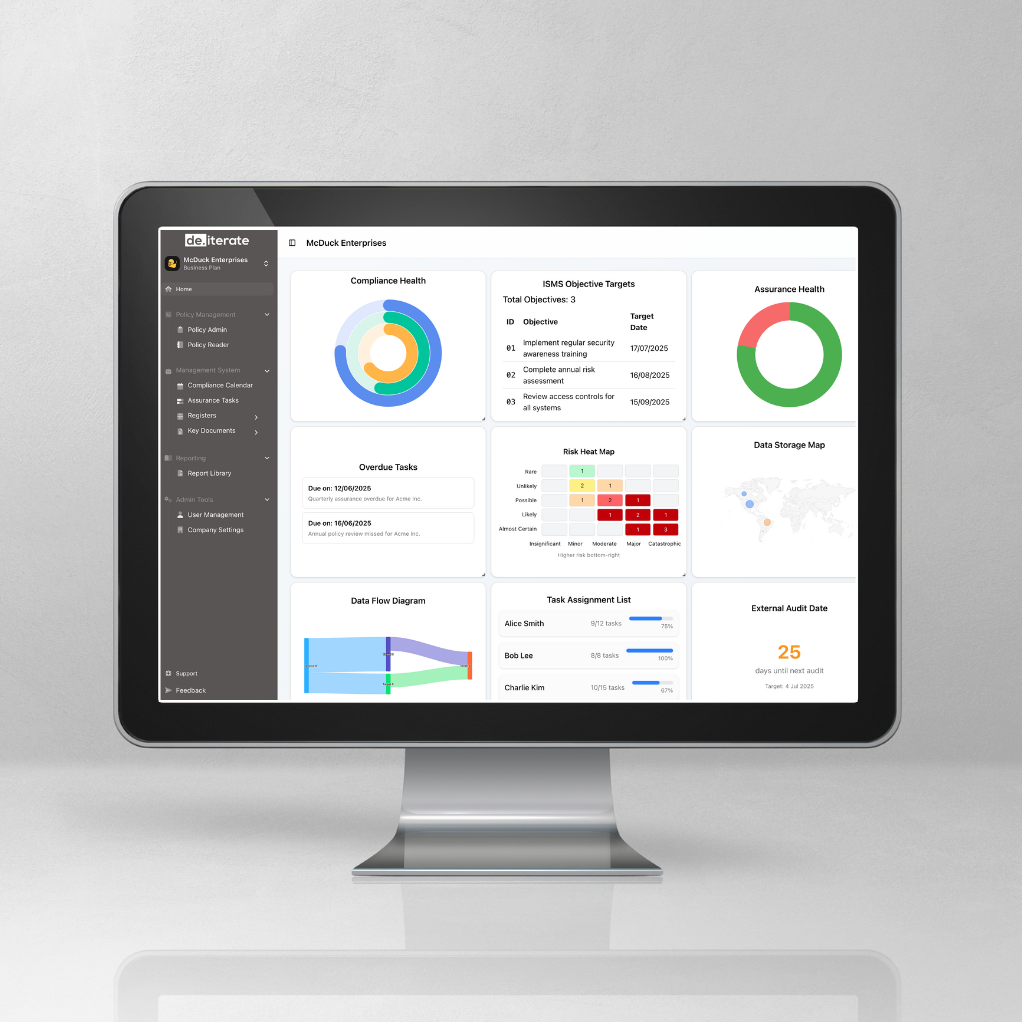
Did you know? All this can be managed by the de.iterate platform—from just $99 per month. Buy now.
Disclaimer: The articles on our website are intended to stimulate interest in the subject matters. All comments and articles are for information purposes only. Professional advice should be sought on specific matters, and with lawyers under Costs Agreement and to which Legal Professional Privilege (LPP) applies.
Tags: