

Evidence First: How to Collect and Maintain Audit-Ready Evidence Without the Yearly Chaos
When we talk about data security, most people jump straight to firewalls, antivirus, and threat detection. But here’s a truth bomb that might hit close to home: you don’t need to protect what you don’t keep.
We get it. It’s tempting to hang onto that file just in case. The contract from a client you offboarded three years ago. The tax file number someone emailed you in 2020. That spreadsheet with everyone’s salary details that you swear you were going to clean up. But every piece of personal data you hold is a liability. Not an asset.
Data minimisation isn’t just a best-practice privacy principle. It’s a business lifesaver. Here’s why.
Imagine You’ve Just Been Breached…
You’re the CISO, or maybe just the unlucky person who clicked the wrong link. You’re now watching your inbox, and every shared folder in your organisation, get swept up in a data breach. If someone unsavoury was poking around your systems, what would they find?
- Emails with embedded passwords?
- Employee info stashed in OneDrive?
- Sales invoices floating in a random Teams chat?
- Confidential contracts backed up to your desktop and to your inbox and to your SharePoint drive?
Every location you keep sensitive data is another opportunity for something to go wrong.
The Case for Deletion: Less is Best
Here’s the brutal truth: most businesses are digital hoarders. But unlike your collection of unread newsletters, this kind of hoarding comes with major consequences.
- Privacy laws (like Australia’s Privacy Act and GDPR) have clear expectations about data minimisation. If you don’t need it, you shouldn’t keep it.
- Cybercriminals love stale data. Why? Because it’s forgotten, unmonitored, and often unprotected. Old systems don’t get patched. Dormant files don’t get moved. No one checks who has access until it’s too late.
- Data breaches cost more the more data you have. Think about it. More exposure, more notifications, more fines.
Where to Start: The Data Detox You Didn’t Know You Needed
You don’t need a 100-page policy to begin minimising data risk. Start by looking in the obvious places:
- Email: If you’ve uploaded a document to SharePoint or Teams, do you really still need it in your inbox?
- Search for risky keywords: Try searching your inbox or storage for words like “password”, “TFN”, “invoice”, “confidential”, or “payroll”. You’ll be surprised (and horrified) at what turns up.
- Check your Teams and OneDrive folders: Are there files in there with customer info or internal reports that should be archived, or deleted?
- Audit dormant systems: It’s the unmonitored, forgotten systems that come back to bite. So remember to check the systems you haven’t used in a while.
- Use the castle and moat method: Sensitive data should be buried deep, protected by layers: multi-factor authentication, role-based access, audit trails. Not floating around in inboxes or sitting on someone’s laptop.
If You Don’t Need It, Delete It
It really is that simple. Every piece of data you erase is one less thing to protect. If you do need to keep it, store it where it’s locked down; someplace like SharePoint with access controls, logs, and real-time provisioning.
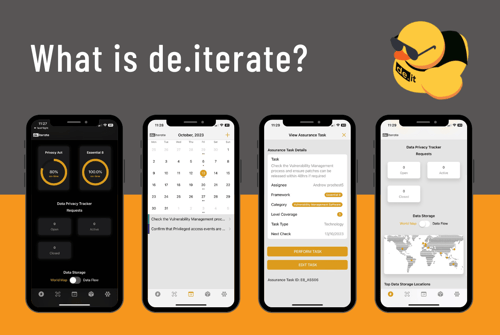
And if you’re not sure where to start? That’s where de.iterate comes in.
How de.iterate Can Help
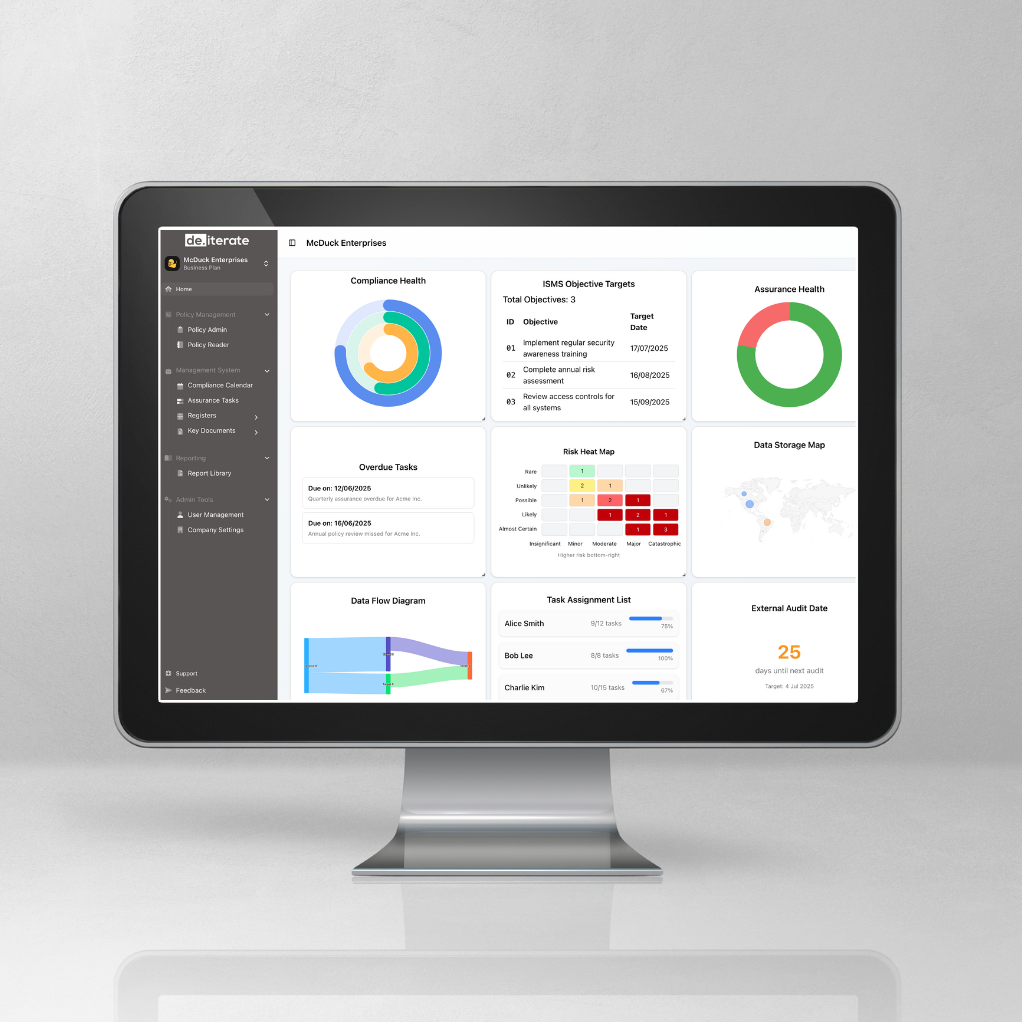
Our platform helps you identify and reduce data sprawl by:
- Making it easy to find where sensitive data lives across your systems
- Managing document lifecycle controls and access reviews
- Auditing usage and surfacing stale or risky content
- Augmenting retention, deletion, and archiving workflows
Because protecting your crown jewels is easier when they’re actually in the crown vault, not scattered across your organisation like confetti.
Data Minimisation is a Superpower
Data breaches don’t usually happen because your firewall failed. The scale of data breaches is so large because of the volume of data being stored; they’d be smaller if you minimised your data hoarding. You can’t breach what you’ve already deleted.
Start small. Store smart. Delete often.
And if you need a hand turning that theory into action, we’re just a few clicks away.
Tags: