

APRA Warns: AI Governance Needs to Be Operational, Not Aspirational
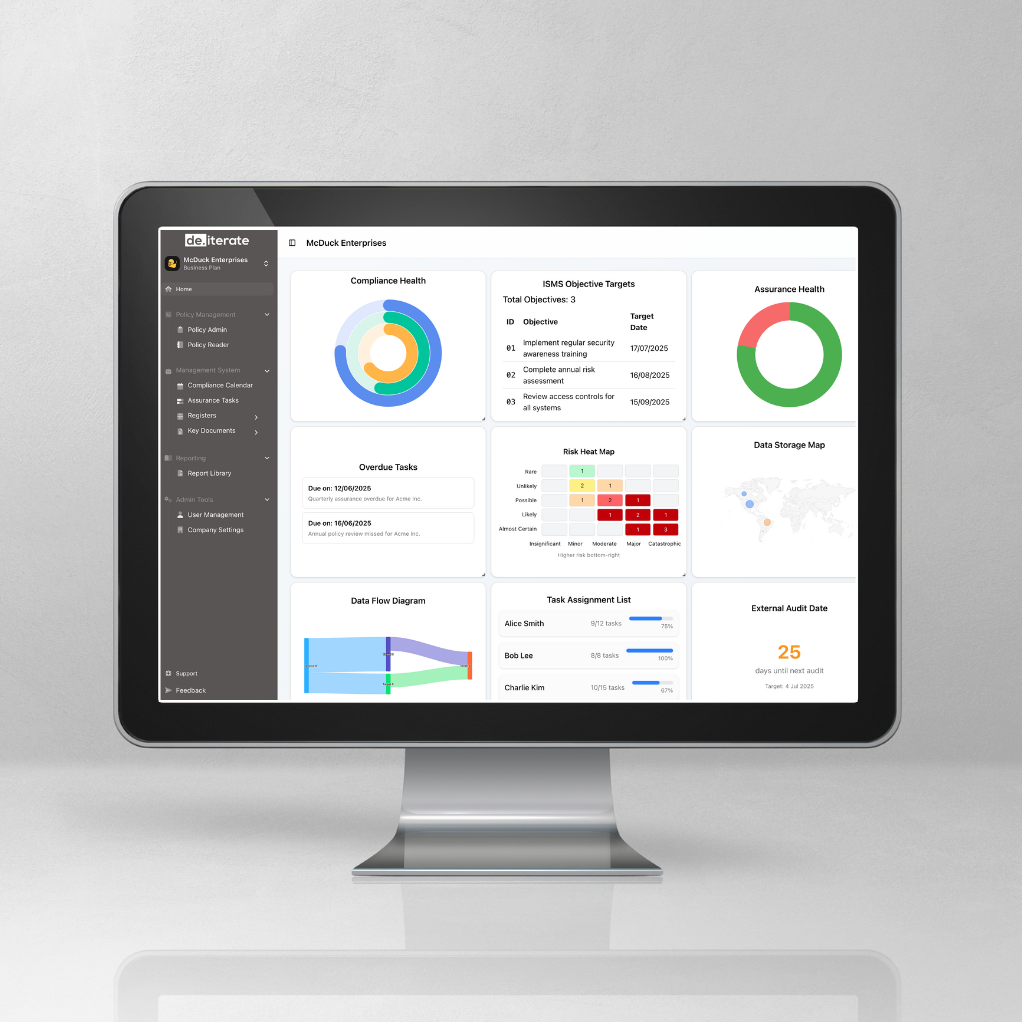
At de.iterate, innovation isn’t about adding complexity. It’s about removing it. Over the past year, the team has been quietly building a new AI-powered framework designed to make compliance simpler, faster, and more intelligent.
As Chief Technology Officer Nick Wood explains, the goal is to integrate artificial intelligence into the de.iterate platform in a way that delivers real, measurable benefits for users, without sacrificing the precision and assurance that compliance demands.
Building the Foundation
de.iterate’s AI initiative began with a simple question: how can we make it easier for organisations to maintain and prove compliance?
The answer lay in rethinking how data flows through the de.iterate ecosystem.
“Before anything else, we focused on creating a robust framework,” says Wood. “It needed to be flexible enough to support new AI-driven features as they emerge, but structured enough to ensure security and consistency across the board.”
This foundation enables de.iterate to easily integrate new AI services over time, whether for automation, predictive analytics, or advanced governance functions. The first phase focused on how the platform ingests, processes, and understands compliance documentation.
Phase One: Smart Document Ingestion and Assurance Task Suggestions
When users upload supporting documents (like evidence of a completed task, a compliance policy, or an audit record), the system automatically analyses the content in a format AI can understand.
From there, the AI cross-references the context, against proprietary mapping and control frameworks. de.iterate then identifies where assurance gaps might be, or where existing compliance tasks could be improved.
“These suggested assurance tasks appear automatically in the user’s notifications,” explains Wood. “Each one links back to the specific text or clause that triggered it, and even generates a recommended task description. The user can review, approve, and instantly add it into their compliance workflow.”
The result is a dynamic, AI-assisted compliance system that doesn’t just store evidence. It actively works with users to strengthen their assurance framework.
Phase Two: Intelligent Gap Analysis
The next phase takes this capability even further. Instead of focusing on individual documents, the system will analyse all evidence items associated with each control or clause, ranging from assurance tasks and checklists, through to risk registers and policies.
“This stage is significantly more complex,” Wood says. “It’s about performing continuous, automated gap analysis across everything a customer has in the system.”
Here’s how it works:
- As users add or modify evidence, the AI re-runs a gap analysis in the background.
- It evaluates whether the control or clause is sufficiently supported, assigning a confidence rating that reflects the strength of the evidence.
- Where gaps exist, the AI can recommend next steps, like creating an assurance task, uploading specific documentation, or addressing related risks.
de.iterate doesn’t just flag problems. It explains them. Each recommendation includes contextual reasoning, showing which items were analysed, how they relate, and why a particular confidence score was assigned.
From Reactive to Predictive Compliance
de.iterate’s AI framework represents a major shift: from static compliance management to a living, intelligent assurance system. As organisations interact with the platform—uploading evidence, completing tasks, and refining controls—the AI continuously learns, updates, and improves its recommendations.
Ultimately, the vision is clear: a platform that helps every organisation get their ducks in a row with minimal friction, maximum transparency, and built-in intelligence.
“Over time,” says Wood, “we want to make it possible for users to achieve and maintain certification just by following the system’s recommendations. Upload your documents, take the suggested actions, and the platform will do the rest.”
It’s compliance, reimagined for the AI era.
Tags:

.png?width=500&height=500&name=pen-test-risk-management%20(1).png)