


APRA Warns: AI Governance Needs to Be Operational, Not Aspirational
The deal is going beautifully. They love the product. The demo went well. Pricing is agreed. Someone has used the word "excited" in writing, which in enterprise sales is practically a marriage proposal.
Then procurement sends a spreadsheet with 280 questions and a tab you didn't notice at first. Everything stops. Your CTO disappears for three days. Someone starts a Slack thread titled "quick question about our encryption" that runs to sixty messages. A salesperson refreshes their pipeline forecast and makes a small sad noise.
The security questionnaire has become part of your sales process whether you planned for it or not. The only real question is whether you treat it that way.
Why they keep getting longer
Your customers are being asked harder questions by their own customers, regulators and insurers. Third-party risk has moved up the agenda in nearly every industry, and the easiest way for a company to demonstrate diligence is to interrogate its suppliers thoroughly and keep the receipts.
Then AI arrived and added a whole new section. Do you use AI in your product? Which models? Is customer data used for training? Who reviews the output? Can we opt out? Most of these questions didn't exist two years ago and nobody has a tidy answer ready.
So the questionnaires grow. They will keep growing. Planning for a world where they shrink is not a strategy.
The hidden cost nobody tracks
Ask most companies what a security questionnaire costs them and they'll say nothing, because no invoice arrives.
Then count the hours. Two days of engineering time. A day of legal review. A week of calendar time while it bounces between people. Multiply that across every enterprise deal in the pipeline, and add the deals that stalled long enough to go cold.
That's a revenue cost dressed up as an administrative one, and it lands hardest on exactly the deals you most want to win, because bigger customers ask harder questions.
Build the library once
Nearly every questionnaire asks the same things in slightly different words. Access control. Encryption at rest and in transit. Incident response. Backups and recovery. Subprocessors. Data residency. Background checks. Business continuity. Vulnerability management. Retention and deletion. Now AI.
Write proper answers to these once, keep them somewhere findable, and attach the evidence that supports each one. The first questionnaire you answer from a library rather than from scratch will feel like cheating. It isn't. It's the same work, done in advance, while nobody was waiting on it.
The important part is keeping each answer connected to the control and evidence behind it. An answer library that drifts out of date is worse than nothing, because now you're confidently telling customers things that stopped being true in March.
Get certified before they ask
A questionnaire is a customer building their own picture of your security posture, one question at a time, because they have no better option.
Give them a better option. ISO 27001 certification, a SOC 2 report, a trust page with your subprocessor list and policies available on request. Plenty of procurement teams will accept a certificate and a handful of targeted follow-ups instead of the full spreadsheet ordeal.
That's a shorter sales cycle, and it's the argument that usually convinces a finance director to fund certification when the compliance argument alone hasn't.
Read the questions as deal signals
Some questions are a checkbox exercise. Others are a warning.
When someone asks for your incident history, your penetration test results, evidence of access reviews, or your AI data handling in unusual detail, they're not filling in a form. They have a specific concern, often driven by something that happened to them or to someone they know.
Those questions deserve a phone call rather than a cell in a spreadsheet. Deals are frequently won at this point by the supplier who engages properly and lost by the one who answers in six words and moves on.
The uncomfortable summary
Your security posture is now part of your product, assessed during the buying process, by people who will compare your answers to your competitors'.
You can keep treating each questionnaire as an interruption. Or you can build the thing once and stop losing three days every time a good deal shows up.
Need help getting your ducks in a row?
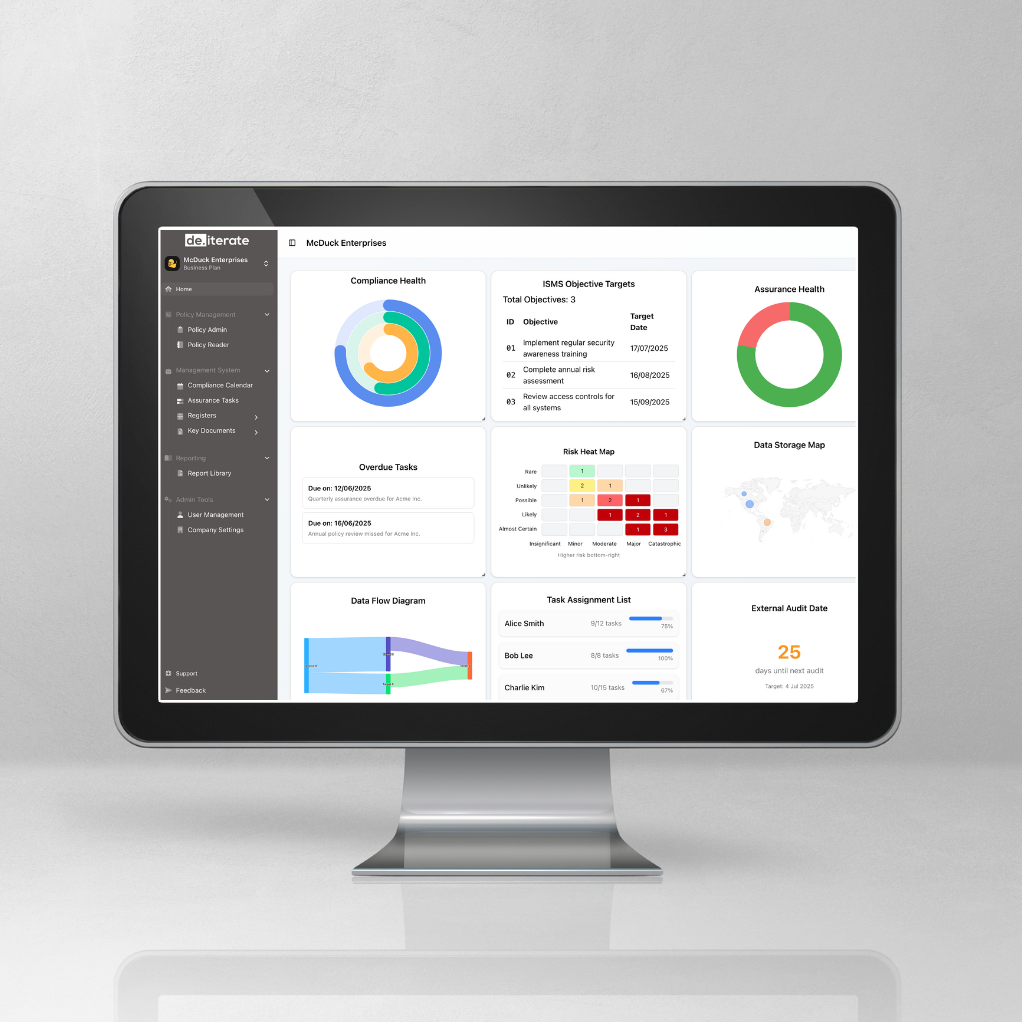
de.iterate keeps policies, controls, registers and evidence connected in one platform, so questionnaire answers come from a system rather than an excavation. There's an auditor portal too, which your customers' assessors tend to appreciate.
Tags:

.png?width=500&height=500&name=pen-test-risk-management%20(1).png)