

Compliance Can’t Live in One Person’s Head
When it comes to information security, reacting after something goes wrong is a bit like installing a smoke alarm once the house has already caught fire.
ISO 27001 Control 5.7 – Threat Intelligence shifts organisations from reactive to proactive. It requires you to collect and analyse information about threats that could affect your organisation, and actually use that insight to inform decisions.
This isn’t about doom-scrolling cyber news or forwarding scary breach articles in Slack. It’s about structured, relevant, actionable intelligence that helps you anticipate risks before they become incidents.
Because in today’s environment, “we didn’t see it coming” isn’t much of a defence. The goal? Move from surprise to preparedness.
Intent of the Control
Control 5.7 exists to ensure organisations systematically gather and evaluate threat information that is relevant to their business, systems, and risk profile.
In plain English: know what’s happening out there, and understand what it means for you.
Threat intelligence might include:
- Emerging vulnerabilities
- New ransomware campaigns
- Supply chain attacks
- Exploited zero-days
- Industry-specific threats
- Geopolitical risks affecting cyber activity
But here’s the key: the control isn’t just about collecting intelligence. It’s about analysing it and integrating it into your risk management process. Think of it as your organisation’s early warning radar.
Why It Matters
Threat landscapes evolve daily. Attack techniques mature. Criminal groups adapt. New technologies introduce new exposures. If your ISMS is static, but the threat landscape is dynamic, you have a gap. Without structured threat intelligence, you risk:
- Blind spots in your risk assessment
- Controls that don’t address current attack methods
- Delayed response to emerging vulnerabilities
- Security investment in the wrong areas
- A false sense of security
ISO 27001 recognises that information security isn’t just about internal controls. It’s about external awareness. You can’t defend against what you refuse to acknowledge.
What Good Looks Like
Threat intelligence doesn’t mean building a cyber fusion centre in your office basement.
For most organisations, “good” looks like proportionate, structured, and documented practices. High-performing organisations typically have:
1. Identified Intelligence Sources
These may include:
- Government advisories (e.g., ACSC alerts)
- Vendor security bulletins
- Industry information-sharing groups
- Trusted threat intelligence feeds
- Security communities
2. Defined Responsibility
Someone owns threat monitoring. It’s not “whoever notices something first.”
3. Regular Review
Threat intelligence is reviewed at planned intervals, often monthly or quarterly, and fed into risk assessments.
4. Integration Into Risk Management
When a new threat is identified, it’s assessed:
- Is it relevant to us?
- Do we have exposure?
- Do we need new or enhanced controls?
5. Evidence of Action
If intelligence results in changes (patching, control updates, awareness campaigns), that linkage is documented. It’s not about collecting alerts and filing them away. It’s about making intelligence actionable.
Common Pitfalls
Like many ISO controls, 5.7 can become performative if misunderstood. Common mistakes include:
- Subscribing to feeds but never reviewing them
- Forwarding alerts without analysis
- Treating threat intelligence as an IT-only responsibility
- Failing to link intelligence to risk registers
- Assuming “we’re too small to be targeted”
Spoiler alert: attackers automate. Size is rarely a shield. Threat intelligence should inform executive conversations just as much as technical ones.
How de.iterate Helps
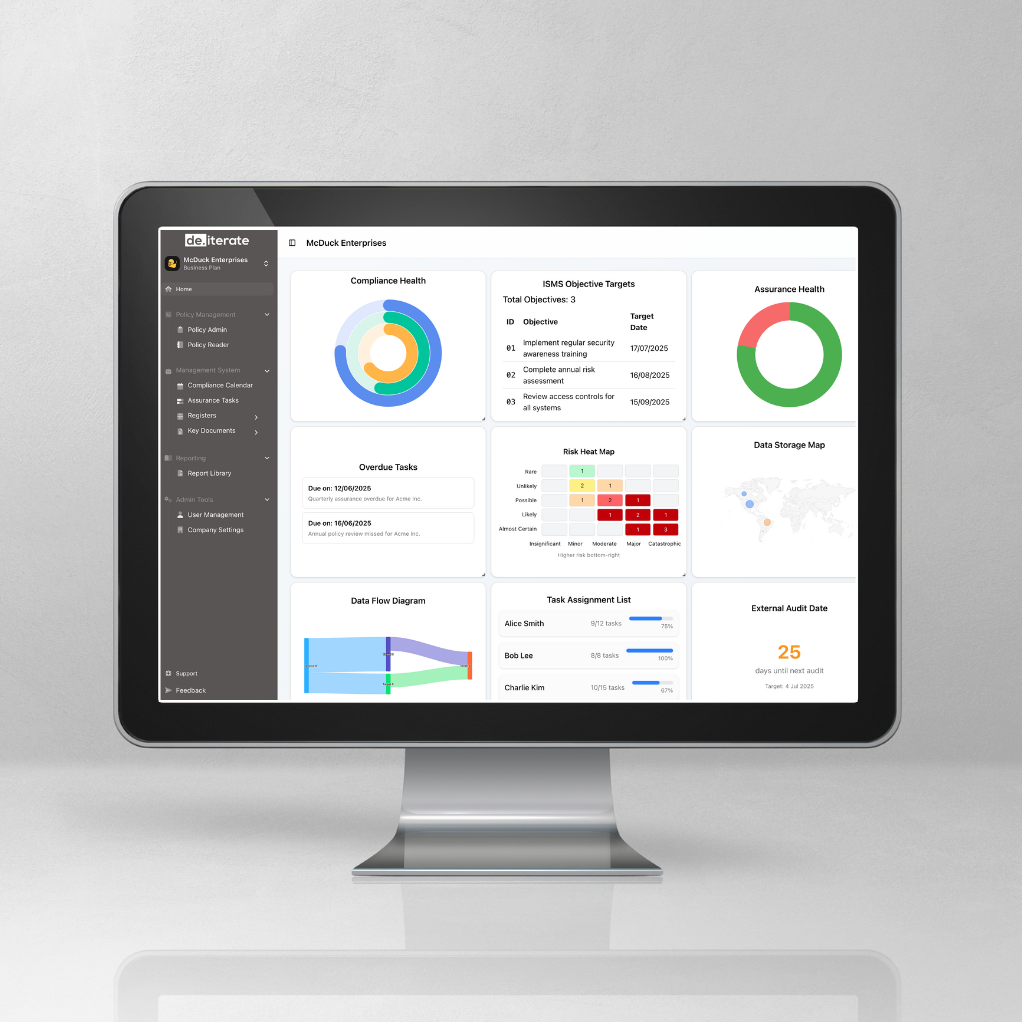
At de.iterate, we help organisations operationalise threat intelligence, without adding unnecessary complexity. Our platform supports you to:
- Assign ownership of threat monitoring activities
- Log and document relevant threat intelligence
- Link identified threats directly to risk assessments
- Track resulting control updates or mitigation actions
- Maintain clear evidence for auditors
- Demonstrate that your ISMS adapts to emerging risks
Instead of threat intelligence living in inboxes or forgotten bookmarks, it becomes embedded within your management system. Because ISO 27001 isn’t about reacting after an incident, it’s about showing that you are continuously aware, continuously assessing, and continuously improving.
Stay Tuned
Each month, The Control Room will continue unpacking ISO 27001, one clause at a time. Whether you’re building an ISMS from scratch or levelling up your current controls, we’re here to help you understand what “good” really looks like—minus the jargon.
Tags: